Companion Planting 101: The Complete Beginner’s Guide to a Thriving, Pest-Resistant Garden
This post contains affiliate links, including links to True Leaf Market. If you make a purchase through one of these links, I may earn a small commission at no extra cost to you.
Search “companion planting” and you’ll hit a wall of contradictions — one chart swears by a pairing, the next tells you to keep those same two plants apart. It’s enough to make a beginner think gardening is a test with hidden rules.
It isn’t. A healthy garden depends first on light, soil, water, timing, and spacing — companion planting is simply a smart way to arrange those basics, and it works well alongside the easiest vegetables to grow as a beginner. Done well, it can make a small bed more productive, draw in beneficial insects, and squeeze an extra harvest out of space you’d otherwise waste. Done poorly (or treated as magic), it just leads to a crowded, confused garden bed.
The real question isn’t “which plants are friends?” It’s “what job is this pairing meant to do?” Once you can answer that, companion planting charts stop being rulebooks and start being tools — and it’s worth saying upfront that companion planting isn’t a fully proven science, more a mix of folklore and emerging research. That’s fine. It still works as a planning tool even where the science is still catching up.
What Companion Planting Actually Means
Companion planting is the thoughtful placement of two or more plants so their arrangement serves a real purpose. That purpose is usually one of a few things:
- A quick harvest before the space is needed. Radishes germinate fast and are pulled before slower carrots need the room.
- A living support. Pole beans climb a sturdy cornstalk instead of needing a trellis.
- Shared timing or conditions. Basil and tomatoes both want warmth, sun, and steady moisture.
- A resource for beneficial insects. Flowering herbs and flowers offer nectar and pollen that draw in the predators of common pests.
If you can’t name the job a pairing is doing, it’s still fine to plant both — just don’t expect a special companion effect to kick in.
Why Companion Planting Works (and Where It Doesn’t)
1. Natural Pest Management
Strongly scented herbs can make it harder for some pests to find their target crop — basil planted near tomatoes may disrupt how tomato hornworms locate their host, for example. “Trap crops” like nasturtiums can pull aphids and flea beetles away from more valuable plants. And flowering herbs such as dill, cilantro, and calendula feed the hoverflies, ladybugs, and parasitic wasps that hunt garden pests.
The honest caveat: pests don’t read charts. A companion planting can lower risk and add resilience, but it won’t guarantee a pest-free garden — it works best alongside good scouting habits, row covers where needed, and healthy growing conditions. For a deeper dive into the research behind these pairings, UMass Amherst Extension’s companion planting fact sheet is a solid, research-based starting point.
2. Soil Health
Legumes like beans and peas host bacteria that pull nitrogen from the air. Most of that nitrogen stays in the plant’s own roots and biomass rather than instantly feeding its neighbor — the real benefit shows up when that plant material breaks down. Pairing deep-rooted crops (tomatoes) with shallow or tap-rooted ones (carrots) also means your plants aren’t competing for water and nutrients in the same soil layer. Beyond companion pairings, keeping your soil fed with a simple homemade plant fertilizer goes a long way toward supporting the whole bed.
3. Smart Use of Space and Time
This is where companion planting earns its keep in a small garden. Fast crops like radishes or lettuce can fill the ground around a slow-growing tomato or pepper — by the time the slow crop needs the room, the quick one is already harvested. Taller plants can also be positioned to shade delicate, heat-sensitive crops so they don’t bolt in summer heat. If you’re planning out timing season by season, what to plant in July is a useful companion read, and once the weather turns, the easiest fall vegetables for beginners can slot straight into the space a summer crop leaves behind.
The Three Sisters
Corn, beans, and squash — grown together as the Three Sisters — are the most famous example of companion planting, and one used by Indigenous nations across the Americas for well over a thousand years. It’s worth treating as living cultural knowledge rather than just a garden trick; growing methods and meaning vary between communities. The USDA’s National Agricultural Library has a thoughtful overview of the practice’s cultural and agricultural significance.
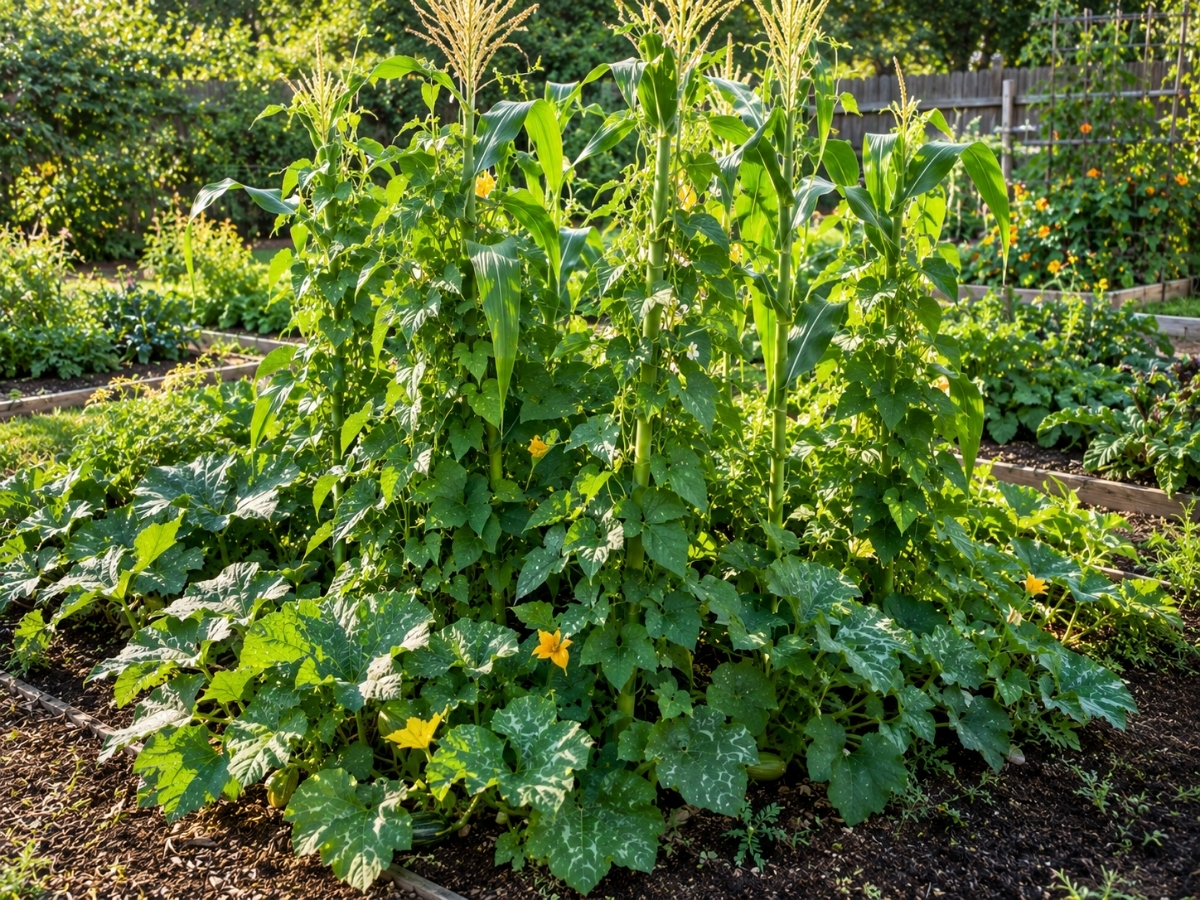 Corn, beans, and squash grown together — a companion planting method
used by Indigenous nations for over 1,000 years.
Corn, beans, and squash grown together — a companion planting method
used by Indigenous nations for over 1,000 years.
The practical mechanics of the system: 1. Corn grows tall first, becoming a living trellis. 2. Beans climb the cornstalks and fix nitrogen at their roots. 3. Squash spreads along the ground, shading out weeds and holding in moisture with its broad leaves.
If you try it, give it room — corn needs to grow in a block (not a single row) to pollinate well, and squash vines need space to run. It’s best suited to an open garden plot, not a small raised bed or container.
Companion Planting Chart: Friends and Foes
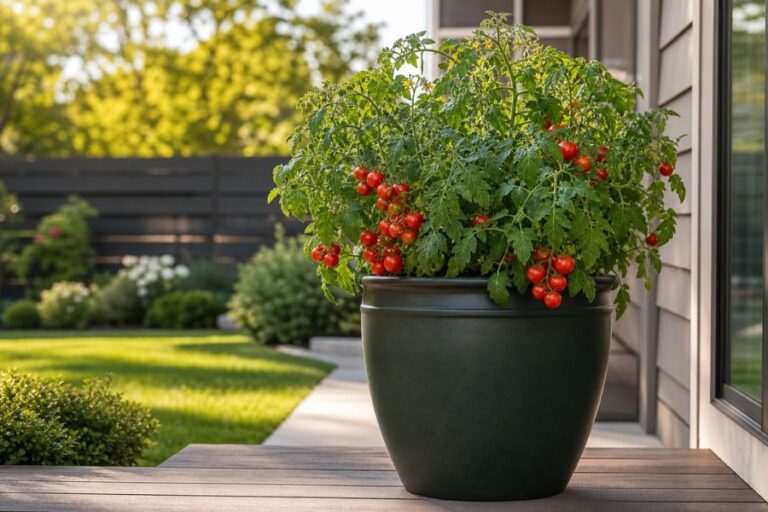
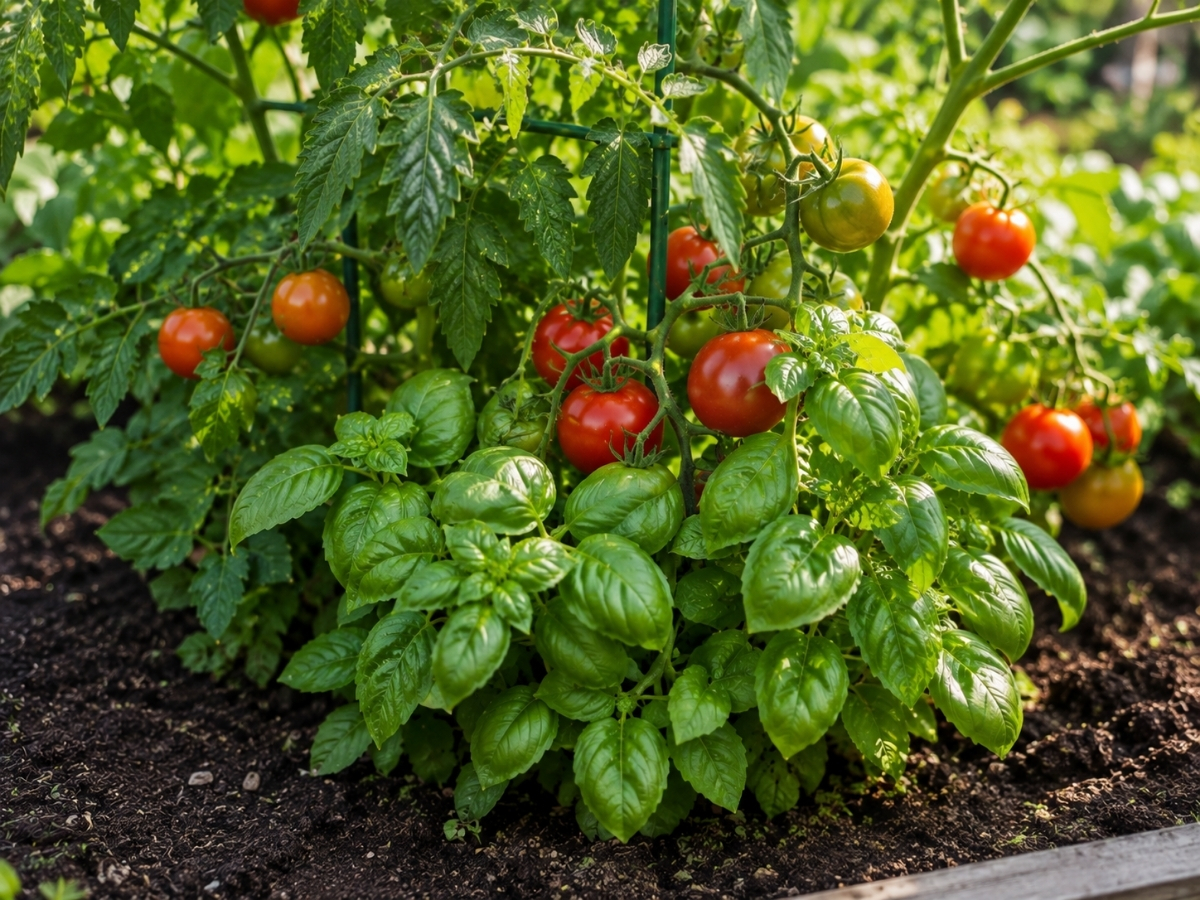 Tomatoes and basil are one of the easiest companion pairings to
start with.
Tomatoes and basil are one of the easiest companion pairings to
start with.
| Main Crop | Good Companion | The Job It Does | Watch For |
|---|---|---|---|
| Tomato | Basil | Shared warm-season needs; may disrupt pest host-finding | Keep airflow around tomato foliage |
| Carrot | Radish | Radish marks the row and is harvested before carrots need room | Thin carrots once radishes are pulled |
| Broccoli / Brassicas | Thyme, dill, calendula | Flowering herbs support beneficial insects | Brassicas still need full mature spacing |
| Corn | Pole beans, squash | Living trellis, nitrogen fixing, ground cover | Needs a large, sunny, open plot |
| Cucumber | Beans, nearby flowers | Shared trellis space, flower diversity | Manage vines; monitor for beetles |
| Squash | Nasturtium, marigold | Flower diversity, possible pest disruption | Vines need serious room to run |
Seed links above go to True Leaf Market — thanks for supporting the site!
Plants to keep apart: – Fennel is highly allelopathic and stunts most nearby crops, especially nightshades like eggplant. – Tomatoes and potatoes share the same blight and pests (like the Colorado potato beetle) — keep them separated. – Onions, garlic, and other alliums can stunt legumes like peas and beans.
Seven Rules for a Good Plant Partnership
- Match the sun. Don’t pair a full-sun crop with one that needs shade unless you’re deliberately using edge shade later in the season.
- Match water needs. Most vegetables want consistent moisture, but Mediterranean herbs like rosemary and oregano prefer it drier — give them their own edge or pot.
- Respect mature size. Plan spacing for the full-grown plant, not the seedling.
- Think in layers. Combine height, root depth, and timing — but leave room for airflow and access too.
- Use timing. A fast crop is a companion when it’s harvested before the slow crop needs its space.
- Give the pairing a job. “Quick harvest,” “living support,” or “beneficial-insect flowers” — if you can’t name it, plant for beauty instead and skip the expectations.
- Observe and adjust. Your own garden is the real test. A season of notes is worth more than any chart.
Quick Tips for Planning Your Bed
- Keep beneficial pairs close — within two to three rows of each other.
- Keep antagonists apart — at least two to three rows of separation.
- Place height with intent — tallest crops toward the side that casts the least shadow on shorter plants (north side in the Northern Hemisphere).
- Don’t overcrowd — one or two companions with a clear purpose beats a chart’s worth of plants squeezed into one bed.
- Keep records — a season of notes turns guesswork into a real strategy for next year.
Ready to Try It Yourself?
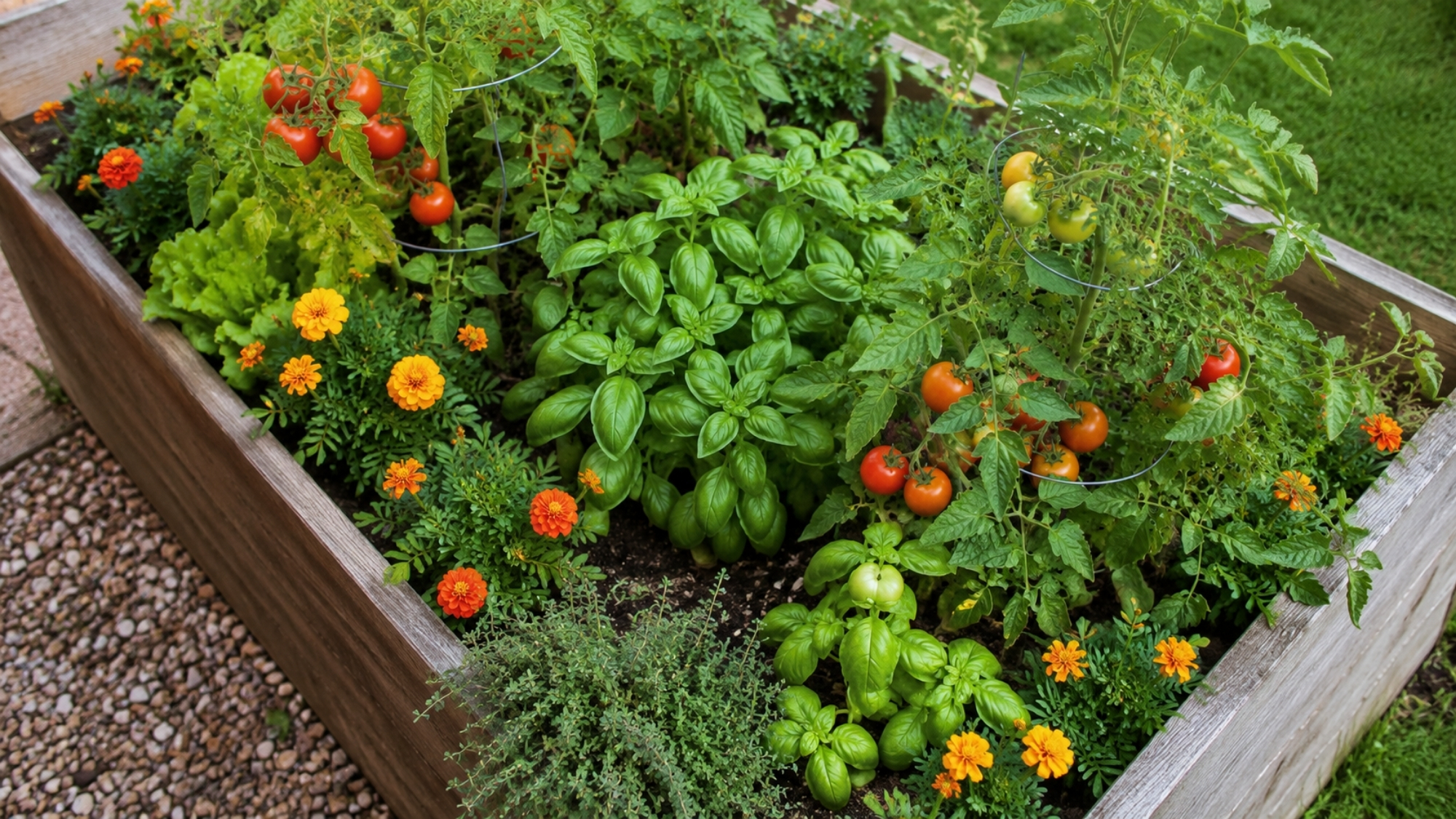
Start small. Pick one pairing from the chart above — carrots and radishes is the easiest possible first lesson in timing, and tomatoes with basil is a classic warm-season pairing. Grab your seeds, give the main crop its full mature spacing, and let the rest of the bed fill in around it. Short on garden space? The same tomato-basil pairing works beautifully if you’re growing tomatoes in containers too — just group the pots together.
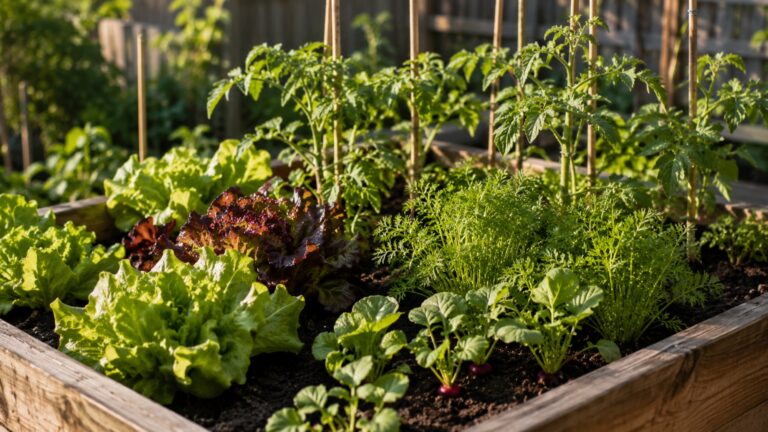
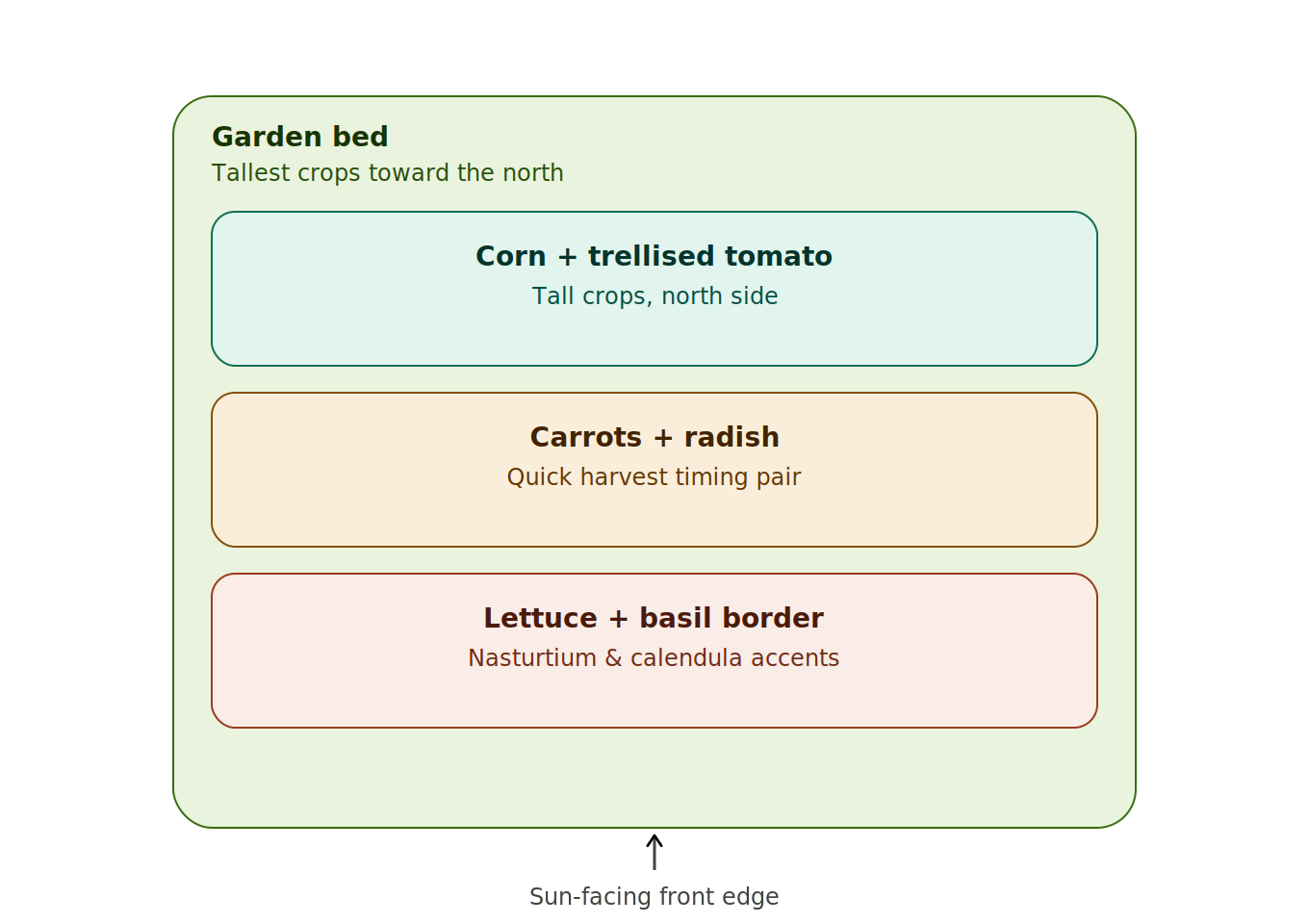 A beginner-friendly garden bed layout: tall crops at the back, root
vegetables in the middle, and sun-facing border plants up
front.
A beginner-friendly garden bed layout: tall crops at the back, root
vegetables in the middle, and sun-facing border plants up
front.
Want more beginner-friendly guidance for your vegetable garden beyond companion planting? My step-by-step ebook covers everything from picking your first crops to troubleshooting common problems along the way.
This post contains affiliate links, including links to True Leaf Market. If you make a purchase through one of these links, I may earn a small commission at no extra cost to you. I only recommend products I’d use in my own garden. Thanks for supporting Yard & Garden Finds!