
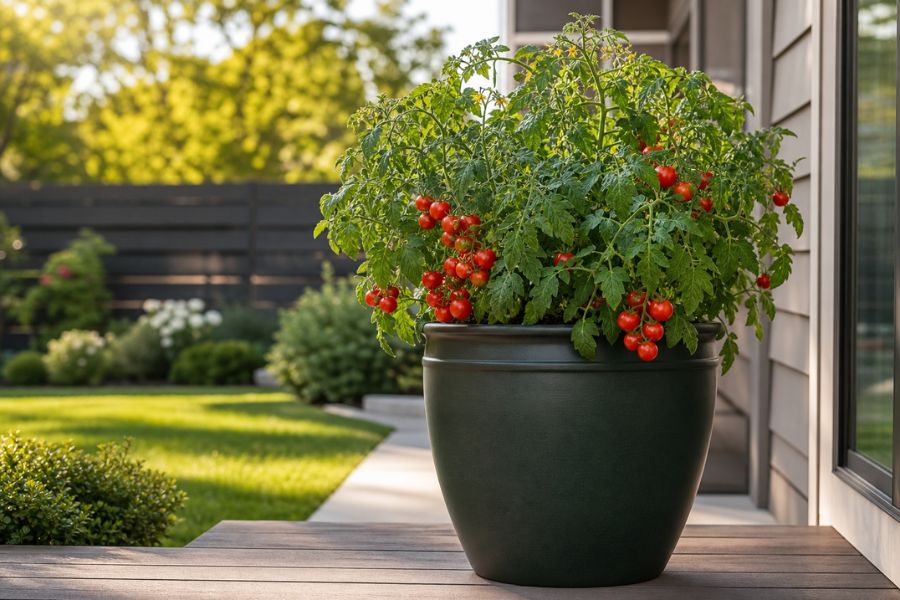
Growing Tomatoes in Containers: A Complete Beginner’s Guide
Affiliate Disclosure: This post contains affiliate links. If you purchase through my links, I may earn a small commission at no extra cost to you. Thank you for supporting Yard & Garden Finds!
You don’t need a massive backyard or a rototilled garden plot to harvest juicy, sun-warmed tomatoes this summer. In fact, if you have a sunny patio, a small deck, or even a tight apartment balcony, you have everything you need to start your own backyard-to-table vegetable garden.
Growing tomatoes in containers is one of the most rewarding projects a beginner gardener can take on. It gives you complete control over the soil, keeps pests at bay, and saves your back from endless weeding.
In this complete beginner’s guide, you’ll learn the exact secrets to growing flavorful, heavy-yielding tomatoes in pots and containers, even if you have zero gardening experience.
Quick Picks: Best Tomato Growing Essentials at a Glance
Don’t want to spend hours researching? We’ve done the homework for you. Here are the top-rated essentials to get your container tomato garden started today.
| Product Type | Our Top Pick | Best For | Key Feature |
| Best Heavy-Duty Planter | [Insert Affiliate Link: EarthEasy Self-Watering Planter] | Busy Gardeners & Patios | Built-in water reservoir prevents drying out |
| Best Fabric Pot | [Insert Affiliate Link: Smart Pots 15-Gallon Fabric Pot] | Strong Root Growth & Airflow | Breathable fabric prevents root-binding |
| Best Starter Kit | [Insert Affiliate Link: AeroGarden Indoor Hydroponic Kit] | Year-Round & Indoor Growing | LED grow lights for indoor countertop harvests |
Why Container Gardening Wins for Small Spaces
If you’re working with limited yard area, pots are your secret weapon. Tomatoes love warmth and sunlight, and containers allow you to chase the sun. If a corner of your patio gets shaded out by an overhanging oak tree in July, you can simply pick up your pot and move it to a brighter spot.
Additionally, container gardening protects your plants from soil-borne diseases (like verticillium and fusarium wilt) that common in old garden beds, and it significantly cuts down on ground pests like cutworms. It’s clean, manageable, and highly productive.
Step 1: Choose the Right Tomato Variety
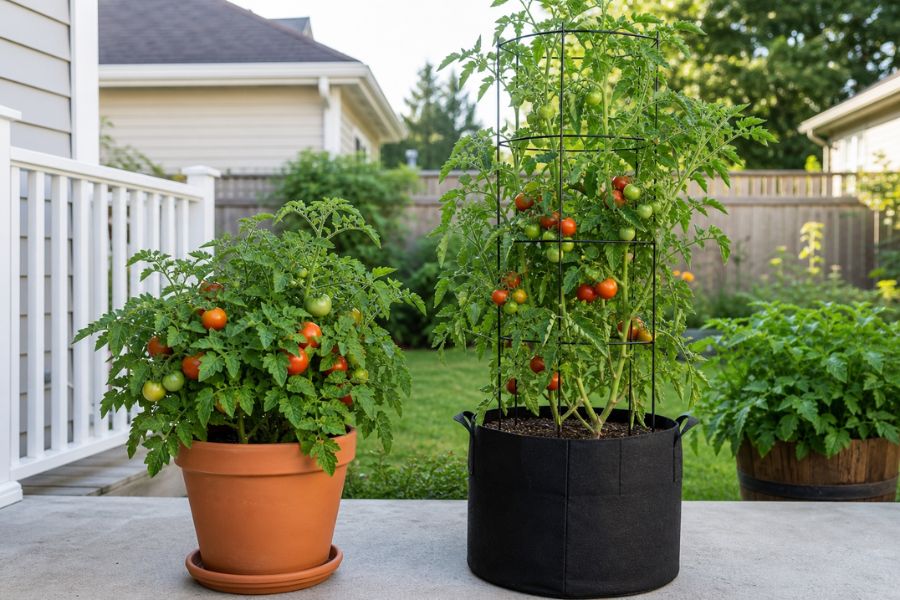
Not all tomato plants are built the same. When shopping at your local nursery or browsing online, you will see two main classifications of tomato plants. Choosing the right one is critical for container success.
Determinate (Bush) Tomatoes
These are the ultimate choices for pots. Determinate varieties grow to a fixed size (usually 3 to 4 feet tall), bloom, and set all their fruit at once over a period of a few weeks. They are compact, sturdy, and won’t overtake your balcony space.
- Great options for US gardens: Celebrity, Roma, and Patio Choice.
Indeterminate (Vining) Tomatoes
These varieties keep growing, vining, and producing fruit all season long until the first winter frost hits. They can easily reach 6 to 8 feet tall, meaning they require heavy-duty cages or trellis systems. You can absolutely grow them in containers, but you need a much larger pot and a plan to support them.
- Great options for US gardens: Early Girl, Beefmaster, and most heirloom cherry varieties like Sun Gold.
Step 2: Pick the Perfect Pot (Size Matters!)
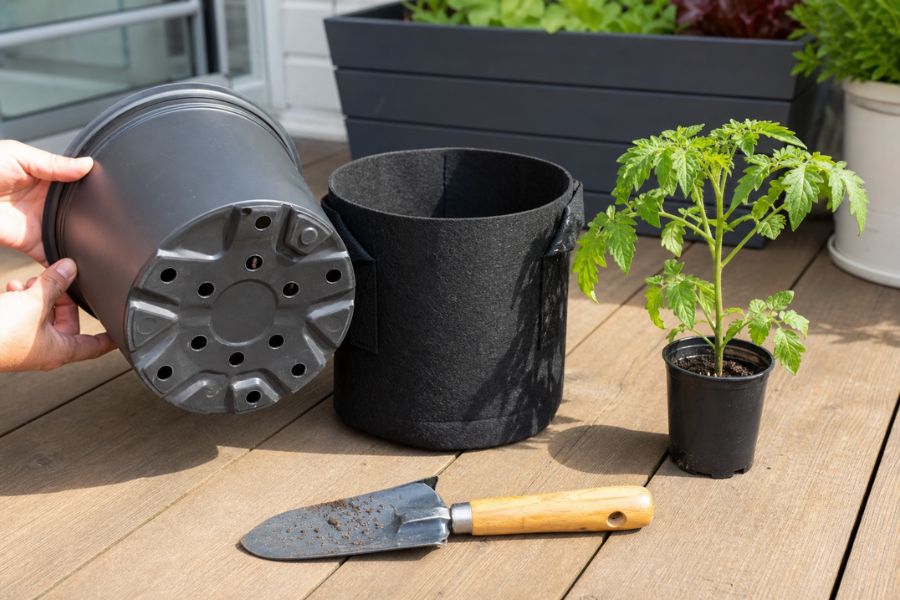
The number one mistake beginner gardeners make is putting a tomato plant in a pot that is too small. Tomatoes have massive, aggressive root systems. If you restrict their roots, the plant will become stressed, stunt its growth, and drop its flowers before they can turn into fruit.
Use this quick guide to select your container:
- For Cherry or Bush (Determinate) Tomatoes: Use a minimum of a 5-gallon container (about 12 inches in diameter and depth).
- For Large Vining (Indeterminate) Tomatoes: Step up to a 10-gallon or 15-gallon container (18 to 24 inches in diameter). [Insert Affiliate Link: Smart Pots 15-Gallon Fabric Aeration Pots] are phenomenal here because they let the roots breathe.
⚠️ The Golden Rule of Pots: Always ensure your container has large drainage holes at the bottom. Tomato roots hate sitting in stagnant, soggy water. It suffocates the roots and leads to root rot.
Step 3: Use the Right Soil and Fertilizer Mix
Never scoop up dirt from your backyard to fill your pots. Ground soil is way too heavy, packs down tightly in containers, and will essentially choke out your plant’s roots. It also introduces weeds and pests right into your clean setup.
Instead, buy a premium, lightweight organic potting mix [Insert Affiliate Link to Organic Potting Mix]. Potting mix is formulated with ingredients like peat moss, coco coir, and perlite to stay fluffy, ensuring excellent drainage and oxygen flow to the roots.
Feeding Your Hungry Plants
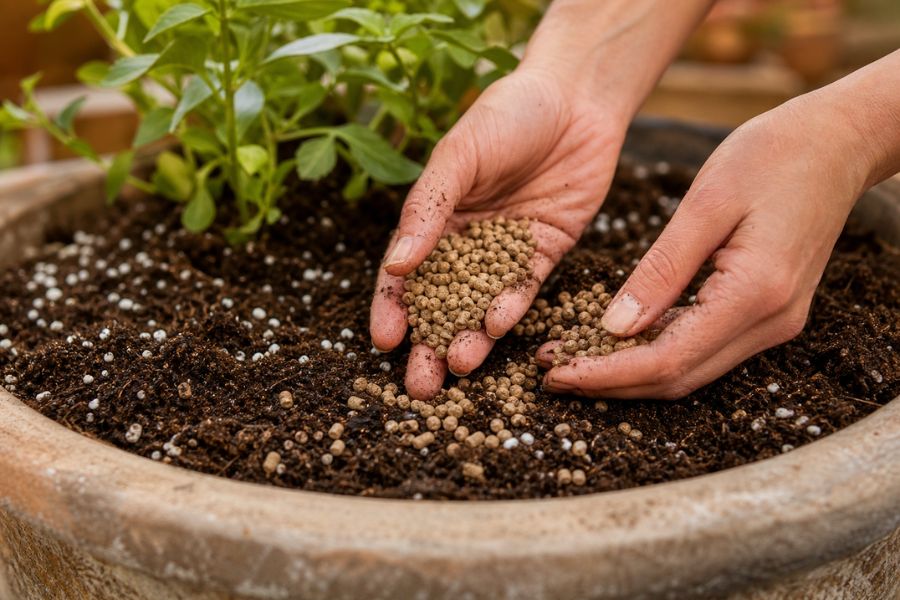
Tomatoes are notorious “heavy feeders”—they require a massive amount of nutrients to build those sweet, juicy fruits. Because regular watering washes away nutrients from potting soil over time, you need to feed them:
- At Planting Time: Mix a high-quality, slow-release organic tomato fertilizer into your potting soil. Look for ones containing calcium, which is vital for fruit development.
- During the Season: Once flowers start appearing, feed your plants every two weeks with a water-soluble liquid fertilizer [Insert Affiliate Link to Liquid Tomato Fertilizer] high in phosphorus and potassium to boost fruit production.
Step 4: Sun, Water, and Staking Support
Sun Requirements
Tomatoes are pure sun-worshipers. To get sweet, ripe fruit, your container needs to receive at least 6 to 8 hours of direct sunlight daily. A south- or west-facing patio, deck, or driveway is usually the ideal location for American growers.
Mastering the Art of Watering
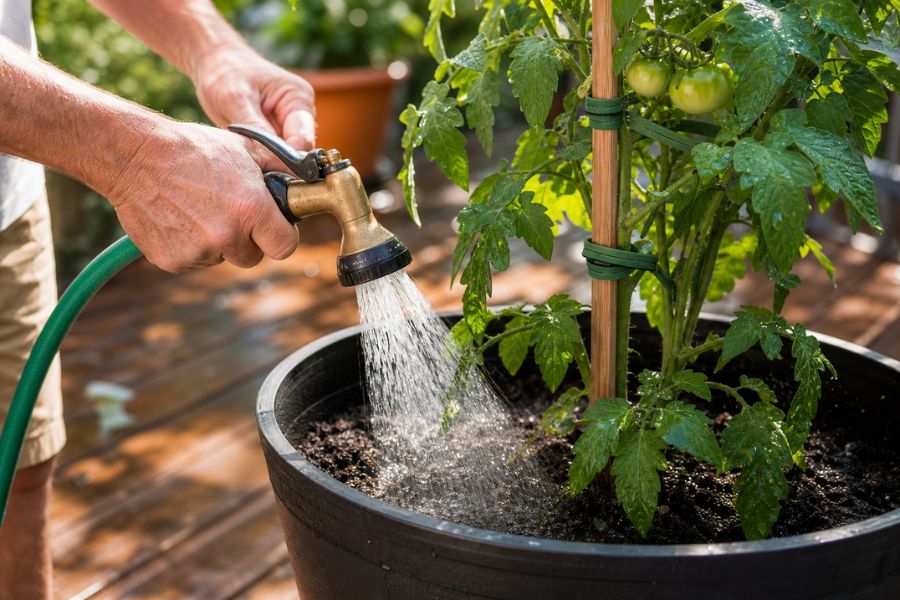
In the heat of mid-summer (especially July and August across most of the US), container soil dries out incredibly fast. You will likely need to water your tomato plants every single morning.
- The Finger Test: Stick your index finger an inch deep into the soil. If it feels dry, water thoroughly until water runs out the drainage holes at the bottom.
- Be Consistent: Inconsistent watering—allowing the pot to dry out completely until the plant wilts, then drowning it—causes a common disaster called blossom end rot. This is where the bottoms of your tomatoes turn black, leathery, and ruined due to poor calcium uptake caused by fluctuating moisture levels.
Stake Them Early
Even compact bush tomatoes get incredibly heavy once they are loaded with fruit. Insert a sturdy tomato cage or a heavy-duty wooden stake into the pot immediately at planting time. If you wait until the plant is large, trying to force a cage into the pot will hack through the delicate root system you worked so hard to grow.
Frequently Asked Questions (FAQ)
When should I plant tomatoes outside in the US?
Wait until all danger of spring frost has completely passed and nighttime temperatures consistently stay above 50°F. For the middle band of the US (USDA Growing Zones 6 and 7), this is usually mid-to-late May. If you live in Southern states (Zones 8-10), you can plant as early as March or April.
Can I grow tomatoes indoors if I don’t have a balcony?
Yes! If you don’t have an outdoor space or want fresh tomatoes during the cold winter months, look into an automated hydroponic grow kit like the [Insert Affiliate Link: AeroGarden Indoor Hydroponic Kit]. These systems feature built-in, automated LED lights that mimic natural sunlight right on your kitchen counter.
Why are the bottom leaves on my tomato plant turning yellow?
Yellowing lower leaves are usually a sign of either overwatering (soggy soil) or a lack of nitrogen. First, check that your pot is draining well and scale back watering if the soil feels like a wet sponge. If moisture isn’t the issue, it’s time to apply a well-balanced liquid fertilizer to give it a nutrient boost.
Start Your Container Garden This Weekend!
Growing your own food is incredibly fulfilling, and tomatoes are the absolute perfect place for a beginner to start. Grab a 5-gallon pot, a bag of organic mix, and your favorite starter plant from the local garden center this weekend. By mid-summer, you’ll be enjoying the sweet, unmatched flavor of homegrown tomatoes right from your patio.
Need the right gear to get started? Check out our curated [Shop My Picks] page for our favorite tried-and-tested patio planters, organic fertilizers, and space-saving hydroponic kits!